Mallorca pearls vs. cultured pearls: what is the difference?
Mallorca pearls are imitation pearls, while cultured pearls are genuine pearls formed inside mollusks with human intervention. The essential difference is how they are created, not just their appearance.
If you choose a piece of jewelry with pearls, here is what you should know about materials, authenticity, and price before buying.
What are Mallorca pearls?
Mallorca pearls are man-made to reproduce the appearance of pearls. They do not grow in a shell: they are obtained by applying layers with a pearlescent effect over a core. The materials and manufacturing process vary between manufacturers.
The name is associated with the island of Mallorca, known for the production of these imitations. However, this does not mean that the pearls were harvested from the island's waters.
An imitation can be carefully crafted and may have a beautiful design. The important thing is that it is correctly described, without being confused with a cultured pearl.
Mallorca or Majorica pearls: are they the same thing?
Majorica is a brand, while Mallorca is the name of the island. Not all jewelry marketed as "Mallorca pearls" is made by Majorica.
The manufacturer Majorica states that its pieces are not natural or cultured pearls. They are made by applying layers of pearlescent finish over a core, in round and baroque versions.
Therefore, neither the round shape nor the irregular contour is sufficient to establish the authenticity of a pearl.
What are cultured pearls?
Cultured pearls are genuine pearls. Their formation process is initiated with human intervention, and the mollusk deposits layers of nacre as the pearl grows.
They can come from fresh or salt water and can have round, oval, or irregular shapes, called baroque.
They should not be confused with natural pearls, which form without human intervention and are very rare. Both are genuine pearls; imitations represent a different category, find out more here about these differences.
At Atelier Devi, we use freshwater cultured pearls, selected for their luster and surface, and matched by shape, size, and shade. Discover them in our collection of jewelry with pearls.
Mallorca pearls vs. cultured pearls: comparison
|
Feature |
Mallorca pearls / imitations |
Cultured pearls |
|---|---|---|
|
How they are created |
Man-made, through a manufacturing process |
Grow in mollusks, with human intervention |
|
Surface |
Pearlescent finish applied over a core |
Nacre deposited by the mollusk |
|
Shapes |
Can be round or irregular |
Can be round, oval, or baroque |
|
What to check when buying |
The manufacturer, materials, and finish |
The type of pearl, quality, and any treatments |
What do cultured pearls look like in Atelier Devi jewelry?
Pearls do not mean a single style. Size, shape, and metal change the way a piece of jewelry looks — from a discreet pair of hoop earrings to a necklace with organic shapes.
Soraya — 14K solid gold and discreet pearls
The Soraya hoop earrings combine 14K solid yellow gold, marked 585, with 4 mm cultured pearls. The 10 mm diameter of the hoop gives them discreet proportions, easy to integrate into everyday outfits.
See the Soraya earrings in 14K gold with pearls.
Zoé — pearls in a contemporary design
The Zoé earrings delicately follow the line of the ear. They combine cultured pearls with 14K gold-plated 925 silver, in a 2-micron layer — an alternative to classic earrings with a single pearl.
See the Zoé earrings with pearls.
Star — baroque pearls and rolled gold
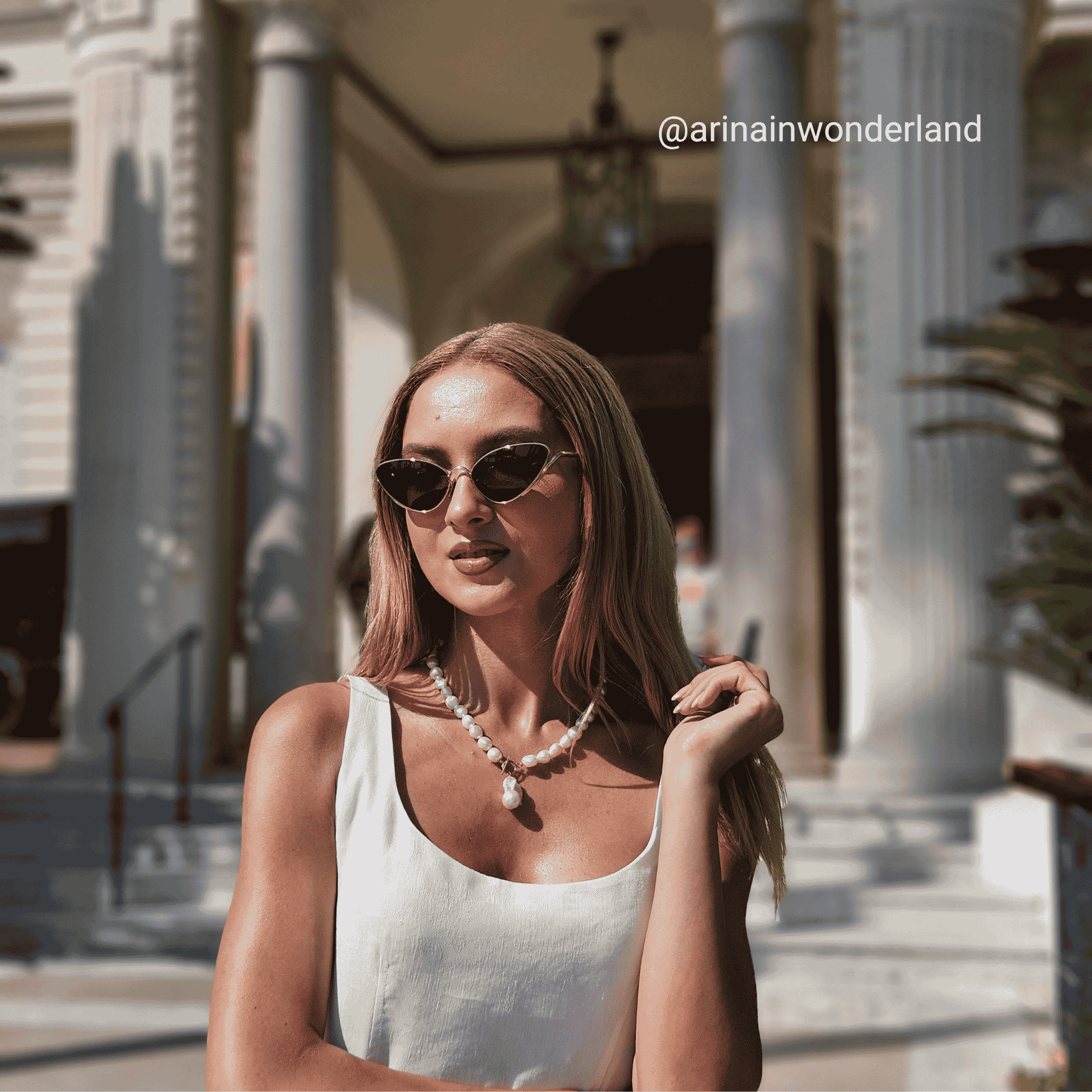
The Star necklace rests at the base of the neck and highlights the irregular contours of the baroque pearls. The rolled gold elements complete a design that you can wear simply or along with a fine chain.
See the Star necklace with baroque pearls.
How do you check the authenticity of pearls?
Start with the description of the jewelry. The seller should specify whether the pearls are cultured, natural, or imitations. For cultured pearls, look for information about their origin from fresh or salt water and any color treatments.
Do not rely exclusively on weight, shape, or small imperfections. These can provide clues, but they are not sufficient evidence.
Avoid scratching tests or rubbing the pearls on your teeth. For the reliable identification of high-value pieces or those of uncertain origin, consult a gemological laboratory.
What influences the price of a piece of jewelry with pearls?
For jewelry with Mallorca pearls, the price depends on the manufacturer, craftsmanship, metal, and design. The name alone does not indicate a certain quality.
For cultured pearls, type, size, shape, luster, surface, and nacre quality matter. In a necklace or a pair of earrings, the matching of the pearls among themselves also matters.
Compare the complete jewelry: the type of pearls, the setting material, the dimensions, and the finishes — not just the photograph or the price.
How do you care for cultured pearls?
Pearls require care to maintain their surface and luster. Put on the jewelry after applying perfume and cosmetics, then wipe them after wearing with a very soft cloth.
Keep them separate from jewelry that could scratch them and do not use ultrasonic or steam cleaning devices.
What do you choose: Mallorca pearls or cultured pearls?
If you want a pearl formed in a mollusk, choose cultured pearls. If you prefer an imitation for its design, check the materials and the quality of the craftsmanship. The important thing is to know what you are buying.
At Atelier Devi, we choose freshwater cultured pearls and combine them with 14K gold, 925 silver, or rolled gold, in designs that go beyond the classic image of jewelry with pearls.
Discover earrings with pearls or explore necklaces with pearls.